
|
Work has been quite intense and very high-level recently, so I was missing the state of flow and the builders high that accompany coding. And I thought it’s a good time to learn something new and since I’ve been reading heaps of good things about Apache Spark, a course on it sounded like a worthwhile pursuit. With that in mind, I enrolled in Big Data Analysis with Scala and Spark and thoroughly enjoyed the experience. |
Recent posts
Coursera: Big Data Analysis with Scala and Spark
2016

|
was the year when:
Thank you all for reading and the very best for you and your families in 2017! |
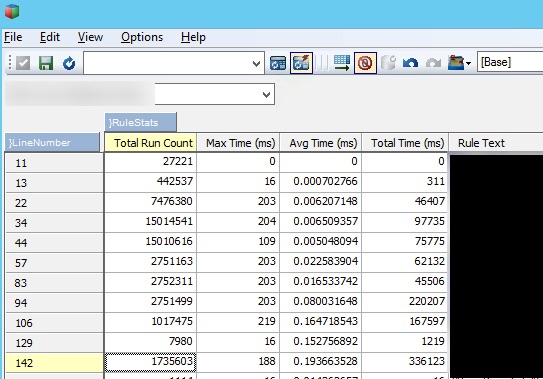
Most useful Planning Analytics feature for me so far: StatsByRule
|
It’s Xmas time again and we get the big bag of presents this time: Planning Analytics on Premise is finally here. There’s a ton of new things to like in new Planning Analytics (and all those need to be throughly tested, so I wouldn’t be upgrading just right now). |
TM1 SSL Certificates Expiry Update
There’s been a flurry of news on SSL certs topic in past 2 weeks. Main ones are:
- Automated updaters are released (yay!) for all client versions and not all server versions (nay, but not a big deal)
- There’s a manual way to update certificates if you can’t do it automatically So all is now ready for the updates, there’s nothing else to wait for :)
We ran a webinar regarding the steps to do the updates, here’s a slide pack for your information. It has a link per TM1 version that might save you some reading time. See it here
Your TM1 SSL certificates will expire in November

|
|
TM1 Dimension Order

|
A quick note on the decades-old topic of dimension order. In a nutshell: don’t really trust System Order, it ignores changing the last dimension and it’s always the most impactful one. Ignore the rest of the post and move on, carry on if you’re interested in my ramblings on it. |
Some statistical functions in TM1FinanceLib: VAR, Median, DevSQ and more

|
Just a quick note that I’ve updated tm1financelib with a few statistical functions (again, nothing more than pointing to them in POI):
I’ve added function descriptions in the original post. Come to think of it, maybe I should post the whole stuff on something like github. Whenever I’ll have a next free moment ) |
Just found TM1 10.3 most important feature
Forget all your Cloud, Planning Analytics and CAFE. It’s finally here!
Java TM1 Extensions: TM1FinanceLib for calculating IRR, NPV and more

|
Well, I’m a bit late to the party, so you all know by now that after TM1 10.2.2 you can use something called Java Extensions to execute your own Java code and call it as a Turbo Integrator function. What I’ll show in this post is how to use this approach to calculate the usual ‘finance’ functions like IRR, NPV and some more. And there’ll be freebies, I’ll give you an extension library for some of the functions so you don’t have to write it yourself. |
TM1 Input in Calculated Cells or Break Back

|
Break-back was one of the famous features in Cognos Enterprise Planning, it allowed data input in a calculated cell and system would adjust all the participating elements to match the new result. Combined with ‘holds’ it was a really awesome feature. TM1 allows input in consolidated cells, but not in calculated ones, so this functionality is kind of missing. Not entirely, I’ll show how to achieve similar behaviour in TM1 (although in a much more restricted manner). I think it’s isn’t actually documented anywhere, so I’ll put it out here. |